Nobody Believes Your Portfolio Anymore — Here's What Replaces It
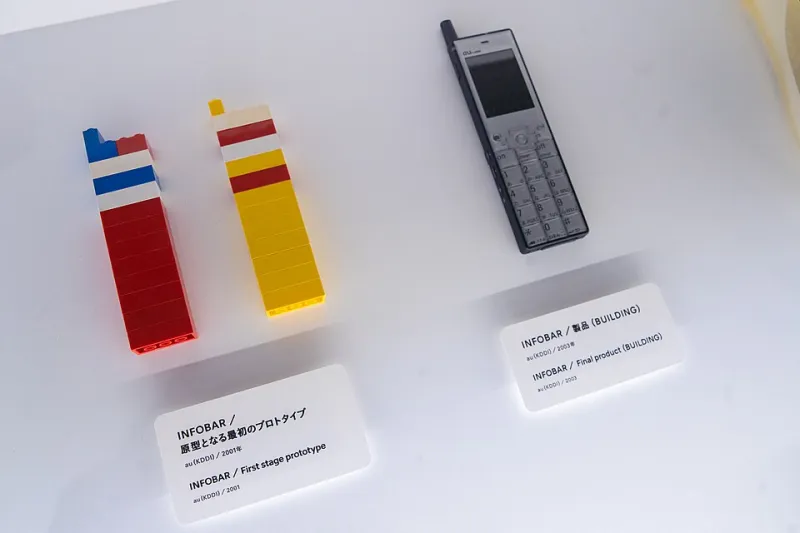
Photo: Dick Thomas Johnson from Tokyo, Japan, CC BY 2.0, via Wikimedia Commons
A designer friend of mine in Portland recently got a job offer rescinded. Not because her work was bad — because the hiring manager couldn't tell anymore whether it was hers. "Your case studies are beautiful," he told her. "That's exactly the problem."
Welcome to 2025, where the single greatest threat to your portfolio isn't a competitor. It's plausibility.
The Moment Polish Stopped Meaning Anything
For decades, the portfolio ran on a simple equation: clean presentation equals competence. You curated your best ten pieces, stripped out the rough drafts, and let the final images do the talking.
That equation broke the moment generative tools made flawless output available to anyone with a laptop and a prompt. A stunning hero image now proves about as much as a nice headshot — which is to say, almost nothing. Recruiters at agencies from Chicago to Austin openly admit they skim final deliverables and hunt for signs of a real human behind them.
The irony is sharp: the more polished your work looks, the more suspicion it attracts.
What Actually Signals a Human Now
Spend time with working creatives who've navigated this shift and a pattern emerges. The people getting hired aren't the ones with the prettiest grids. They're the ones showing their receipts.
Process videos. A ninety-second timelapse of an illustration coming together — mistakes, backtracking, color swaps and all — is functionally impossible to fake convincingly and instantly communicates decision-making. One motion designer in Atlanta told me clients now ask for process clips before they ask for final files.
Annotated drafts. Instead of a silent image, try a version with margin notes: "client hated v2," "almost went with the serif here." It reads like a conversation, because it was one. AI output doesn't have conversations. It has completions.
Voice memos. The most underrated format going. A two-minute rambling voice note walking through why a project failed, or what you'd do differently, carries texture no written case study can match. Hesitations, laughs, mid-sentence pivots — that's the fingerprint.
A Simple Framework: Show the Thinking, Not Just the Thing
If you're rebuilding, here's a structure that's working for a lot of US-based freelancers right now:
- Open with the constraint. What made this project hard? Budget, deadline, a client who wanted five things at once. Constraints are where skill lives.
- Show two wrong turns. Not one — two. One looks like a mistake. Two looks like a process.
- Include one artifact of doubt. A deleted direction, an email you agonized over, a sketch you abandoned. This is the part AI literally cannot generate, because AI doesn't doubt anything.
- End with what you'd change now. Nothing says "living practitioner" like someone still thinking about work that's already shipped.
That's it. Four moves. The polish can stay — but it becomes the garnish, not the meal.
The Deeper Shift
There's something almost philosophical happening under the practical advice. For years, creators were told to hide the machinery. Show only results. Protect the mystique. AI didn't just make that strategy obsolete — it made it self-defeating.
What's emerging is a portfolio culture that values provenance the way the art world always has. A painting's value isn't just the canvas; it's the chain of custody, the story of who made it and how. Your work samples are heading the same direction. The finished piece is the exhibit. The process is the certificate of authenticity.
So if you've been sitting on a folder of half-finished experiments, deleted takes, and voice notes you recorded at 1 a.m. — congratulations. You've been sitting on your most credible portfolio all along.
The people who thrive in this era won't be the ones who out-polish the machines. They'll be the ones who show what the machines were never invited to: the thinking, the doubting, the stubborn human middle of making things.